August Recipe – Yogurt-Marinated Chicken Kebabs with Aleppo Pepper

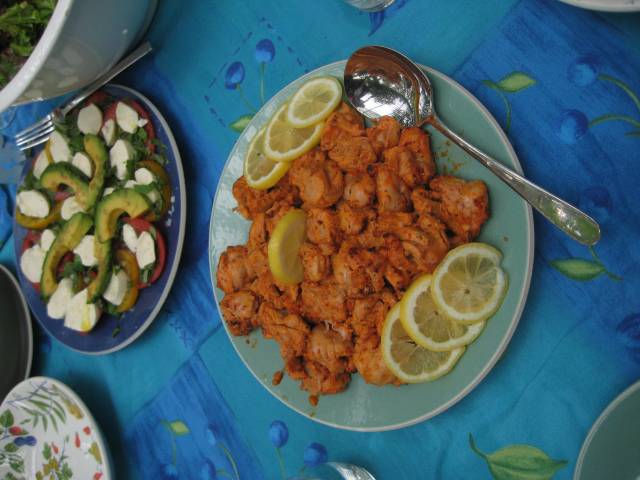
I normally wouldn’t just share a recipe out of a magazine but I made this the other day and it was so delicious, inexpensive and easy that I just had to pass it on.  This was out of the July 2009 Bon Appetit.  I served it with Julie’s Caprese Salad and a green salad.

IMG_2776


Ingredients:

1 ½ TBSP      Aleppo Pepper[1]

2 tsp              Hungarian Sweet Paprika[2]

1 C                  Plain Yogurt, Whole-Milk Greek style

3 TBSP           Extra Virgin Olive Oil

2 TBSP           Red Wine Vinegar

2 TBSP           Tomato Paste

2 tsp              Celtic Salt, coarse

1 tsp              Black Pepper, fresh ground

6 cloves        Garlic, peeled and flattened

2                      Lemons, unpeeled and thinly sliced in rounds

2 ¼ Lbs          Chicken Thighs, boneless, skinless and cut into 1 ¼ “ pieces

Preparation:

 Mix Aleppo pepper with 1 TBSP warm water in large bowl, letting it sit until it forms a paste (about 5 minutes).  Add yogurt, olive oil, red wine vinegar, tomato paste, 2 tsp coarse salt, 1 tsp black pepper, and 2 tsp Hungarian paprika.  Whisk until blended.  Stir in garlic and lemon slices and then chicken.  Cover and chill overnight.

Prepare BBQ on medium-high heat. 

Thread chicken onto steel skewers.  Discard marinade.  Sprinkle chicken with additional Aleppo pepper, salt and pepper.  Grill for approximately 10 minutes, turning half way through.  Serve on plate with additional lemon slices.

Serves 4-6 depending if you want leftovers


[1] This is a delicious dried pepper.  I found it at Savory Spice Shop.  You can mail order from them.

[2] Also from savory but you might be able to find this one locally.

Chopping & Cooking with Fresh Herbs

Fresh herbs are a great way to add lots of flavor to many dishes.  Although they can be expensive to buy, they are cheap and easy to grow.  As perennials, they will return every year even if you live in a very cold climate.  In my garden I have oregano, sage, chives, parsley, and thyme.  I also have rosemary but it will die in a cold climate over the winter so I keep it in a pot and bring it in during the cold months.  Unfortunately basil will not winter, as often cilantro will not.  I purchase those every spring and keep them in the ground for most of the spring and summer. 

The challenge with herbs is that they tend to lose their flavor fast.  I try to never purchase dried herbs as they often are tasteless.  This video will show you the best way to handle herbs to get the maximum flavor from them.  Oh and one last note – fresh chopped herbs do maintain their flavor if kept in butter.  In the fall, before a cold frost, I usually pick lots of herbs, chop them and mix them with a little softened butter.  I put this in the freezer so I can have fresh (almost) herbs throughout the winter.

How Low Can You GO?

National Public Radio (NPR) asked for people to submit a recipe that cost $10 or less.  I am excited to tell you that I had submitted one of my recipes and it was accepted!  You can see this recipe and many other submissions here.  I haven’t yet read the rest of the recipes to see how healthy they are.  When I do, I’ll comment.  Meanwhile maybe you can see what you think!

Delicious Grilled Salmon

Here is a great easy dinner all planned out for you.  The only thing you need to do ahead is the glaze.  It takes no time to put together, just time to reduce on the stove.

Salmon with a Maple Ginger glaze grilled on a cedar plank.  Included in the dinner are grilled zucchini and crooked necked squash, Farmer’s Market tomatoes, and a field green salad with a Balsamic Champagne Vinaigrette.

For the Salmon:

1 ¾ Pound Fresh Salmon

1 bunch of Chives or Green Onions[1]

1 Untreated Cedar Plank (I purchased mine at Whole Foods.)

Soak a cedar plank in water for 12-24 hours. 

Glaze:

1 C              Maple Syrup, Grade B

2-3 TBSP   Ginger, freshly grated (see the best grater)

4 TBSP       Lemon Juice

3 TBSP       Tamari Sauce (I prefer San-J wheat free)

Prepare Glaze:

Place all ingredients in a small sauce pan and simmer until reduced to less than 1 cup.  I find in Colorado altitude this takes about 1 hour.  You can make this a day or two early.  Just reheat to use.  

To cook:

Place the soaked plank on a hot grill and let it blacken on one side, about 15 minutes.  (You will hear it start to crackle.)  Once it is black, turn it over.  Lay onions on plank.  Place salmon on top of that.  Pour ½ of glaze on top of salmon.  Close lid and grill on medium to high until salmon is cooked, approximately 10 minutes.  Note:  You may want to keep a spray bottle of water near by in case the plank starts to burn.

Zucchini & Crooked Neck Squash Grilled:

1-2              Zucchini, depending on size, sliced lengthwise into 3 or 4 pieces depending on thickness

1-2              Crooked Neck Squash, sliced lengthwise into 3 or 4 pieces depending on thickness

2 TBSP       Fresh Oregano, chopped[2]

2 TBSP       Parmesan, grated
S&P to taste

Olive oil to coat

Prepare:

Drizzle olive oil over both sides of squashes.  Turn skin side down on outside pieces.  On one side sprinkle oregano and parmesan over evenly.  S&P to taste.   Place on grill, olive oil only side down.  Grill for approximately 10 minutes or until squash is soft but not over cooked.

Salad:

The basic salad I did was this one.  The differences is I used the following ingredients but the same dressing.

Field Greens

Yellow Bell Pepper

Toasted Pecan pieces

Applewood Goat Cheese

Dried Cranberries

Serves 4


[1] Chives are a perennial and are really easy to grow.  By having them in my garden, I can save money since I don’t have to buy them and they are a great substitute for green onions.

[2] Oregano is another perennial herb that is so easy to grow.  I planted mine years ago and it just keeps coming back in abundance every year.

July Recipe – Poached Catfish & Vegetables in a Wine Chili Sauce

I am often reminded that one of the reasons many people opt for fast food is the idea that cooking healthy takes way too much time.  One of the tricks is to always have the basics in the house.  Here is a list of what I like to have on hand.

In an effort to stop this myth, I am going to start giving you easy and yet incredibly nutritious recipes and meals that take very little time to prepare.    This recipe is just that – a meal in and of itself.  Enjoy!

Ingredients:

3/4 lb     Catfish

1 TBSP   ½ & ½

1 TBSP   Butter

1 med   Purple Onion, chopped

1 med   Yellow Bell Pepper, chopped

2 lg         Roma Tomatoes, chopped

2 TBSP   Sherry

1 TBSP   Grade B Maple Syrup

½ C         White Wine

1 tsp      Green Chili Powder (more if you like)

S&P        To Taste

1 lg         Batch of Spinach, coarsely chopped

Preparation:

In a large skillet over low to med heat melt butter.  Add onion, yellow bell pepper, tomatoes, chili powder, sherry and maple syrup.  Cover and slow cook for about 15 minutes until the vegetables are softening.  Mix in the white wine.  Pour the ½ & ½ over the catfish, coating both sides.  Salt and pepper the fish.  Place the catfish on top of the vegetables and cover.  Cook for approximately 5 minutes.  Turn and cook the second side for another 5 minutes.  (Check for flakiness to know when the fish is done.)

Meanwhile in another (fairly large) skillet, place ¼ c of water.  Turn the pan on medium heat.  Once the water is hot, add the spinach and cover for about 1-2 minutes.  (I heat the water just after I’ve turned over the catfish so I can do the spinach just at the last minute of cooking the fish.)

Divide the spinach between two plates.  Place the mixed vegetables on top of the spinach.  Place a piece of catfish on top of this.  Finish by adding any extra juices over the top.  Serve immediately.

Serves 2

The Effects of Stress

STRESS AS A NATURAL OCCURRENCE

Our bodies are designed to handle variations from diet, exercise, stress and weight.  It regularly produces assorted hormones for a period of time to take care of these situations.  All this is a normal cycle for the body. 

STRESS & HORMONES

The challenge is when that stressor continues for a prolonged period of time.  This causes the body to overproduce hormones, thus stressing the entire system, breaking down cells, tissues, and organs.

When our body undergoes a stress, the adrenal glands produce adrenaline aka epinephrine.  This hormone stimulates the heart muscle, alters the rate of blood flow, and raises basal metabolic rate.  This is known as the fight or flight syndrome.  Epinephrine also prompts the secretion of glucagon by the pancreas, causing the release of nutrients from storage.  The steroid hormone cortisol is also produced.  It enhances protein degradation, which raises amino acid levels in the blood so that they become available for conversion of glucose.  The two other hormones induced by stress, aldosterone and antidiuretic hormone both help to maintain blood volume.[1]

Epinephrine does not stick around very long in the body however, when stress is prolonged, cortisol does.  This hormone will affect the body in many detrimental ways.  [2]Excess cortisol will:

  • Decrease metabolism by inhibiting thyroid function
  • Depletes protein in the muscles, bones, connective tissue and skin which can cause fatigue, weakness, thinning of the bones, and bruising
  • Decreases the production of androgens and growth hormones which build muscles
  • Can cause insulin resistance[3]
  • Increase fat accumulation, especially in the belly
  • Increase appetite and carbohydrate cravings
  • Will cause depression, anxiety, and mood swings

Is cortisol related to abdominal obesity?

“Yes. There is a link between high cortisol levels and storage of body fat, particularly “visceral” abdominal body fat (also known as intra-abdominal fat). Visceral fat is stored deeper in the abdominal cavity and around the internal organs, whereas “regular” fat is stored below the skin (known as subcutaneous fat). Visceral fat is particularly unhealthy because it is a risk factor for heart disease and diabetes.”[4]

The challenge with cortisol and weight is this.  First, when you are stressed you produce more cortisol which will lead to weight gain.  When you are overweight the adrenal glands produce more cortisol so it is a viscous cycle. 

 ADDITIONAL AFFECTS FROM STRESS

Free radical production

THE NEGATIVE ROLE OF CERTAIN FOODS & DRINKS

Food can play an important role in both exacerbating the problem and relieving the problem. 

The following list will cause the adrenal glands to produce adrenaline and cortisol.  Over the long term this will eventually exhaust the adrenals:

  • Caffeine, especially beyond one or two cups a day on a regular basis will actually act like long term stress in the body
  • Chocolate in excess as it will act as a stimulant
  • Soda will affect blood sugar levels as well increase production of stress hormones
  • Heavy alcohol consumption will cause the adrenals to overreact
  • Refined foods and sugar will affect insulin production and consequently blood sugar spikes and falls
  • Refined foods will deplete the body of essential vitamins and minerals thus stressing the entire system
  • Refined salt is chemically cleaned and devoid of all minerals and will increase blood pressure
  • Can create a more acid pH in the body, which allows for disease to develop

THE ROLE OF HEALTHY FOODS

The following is a list of vitamins and minerals that will support the body during stressful times and therefore should be included in your daily meals:

  • B Complex is necessary for the production of all neurotransmitters including Seratonin, which is a calming neurotransmitter, and it vital for the functioning of the adrenal glands.  Foods high in the B vitamins include:  dark leafy green vegetables, wheat germ, brewer’s yeast, most grains
  • Vitamin C is depleted with prolonged bouts of stress and is also required for normal functioning of the adrenal glands.  Sources include:  fruits especially citrus and berries, tomatoes and green vegetables
  • Vitamin A is an antioxidant thus maintaining the health of the cells.  Foods rich in A include:  milk, eggs, butter, and fruit
  • Vitamin E is also an antioxidant.  Foods rich in E include:  nuts, germ oils and green leafy vegetables
  • Minerals, especially magnesium which relaxes muscles.  Sources of magnesium include:  leafy green vegetables, beans and legumes, vegetables, seaweed, nuts (almonds, cashews and filberts especially) and seeds (especially sesame)
  • Omega 3 fatty acids have a positive effect on moods.  Sources include:  salmon, tuna, sardines, flax seed oil, pumpkin oil, dark green vegetables
  • Night shade vegetables as they have an expansive effect and therefore might be beneficial for someone tense from work, stress or activity which takes great concentration.[5]  Nightshade include;  all peppers, tomatoes, potatoes, eggplant

 WHAT YOUR DIET SHOULD INCLUDE

  1. Salmon
  2. Eggs
  3. Lots of leafy and dark green vegetables
  4. Night shade vegetables, if you can handle them
  5. Almonds, cashews, filberts and sesame seeds
  6. Beans and legumes
  7. Citrus fruits and berries

OTHER THINGS TO LOOK AT TO REDUCE THE AFFECTS OF STRESS

        EXERCISE

  • Moderate levels are best with a duration lasting less than one hour
  • Critical to maintain optimal cortisol levels and hormone balance
  • Helps handle stress by improving cardiovascular and musculoskeletal systems
  • Improves insulin resistance (studies have shown that as little as 3 weeks of regular exercise can lessen insulin resistance[6])

        LAUGHTER

  • Using a similar protocol, the current research found that the same anticipation of laughter also reduced the levels of three stress hormones. Cortisol (termed “the stress hormone”), epinephrine (also known as adrenaline) and dopac, a dopamine catabolite (brain chemical which helps produce epinephrine), were reduced 39, 70 and 38 percent, respectively (statistically significant compared to the control group).  Chronically released high stress hormone levels can weaken the immune system. [7]

        MEDITATION

  • The study, done in China, randomly assigned college undergraduate students to 40-person experimental or control groups. The experimental group received five days of meditation training using a technique called the integrative body-mind training (IBMT). The control group got five days of relaxation training. Before and after training both groups took tests involving attention and reaction to mental stress.
  • The experimental group showed greater improvement than the control in an attention test designed to measure the subjects’ abilities to resolve conflict among stimuli. Stress was induced by mental arithmetic. Both groups initially showed elevated release of the stress hormone cortisol following the math task, but after training the experimental group showed less cortisol release, indicating a greater improvement stress regulation. The experimental group also showed lower levels of anxiety, depression, anger and fatigue than was the case in the control group.
  • “This study improves the prospect for examining brain mechanisms involved in the changes in attention and self-regulation that occur following meditation training,” said co-author Michael I. Posner, professor emeritus of psychology at the University of Oregon. “The study took only five days, so it was possible to randomly assign the subjects and do a thorough before-and-after analysis of the training effects.”[8]

        YOGA[9]

  • Asana are the physical postures that help with muscle relaxation
  • Savasana is usually at the end of a class and it is a pose for complete relaxation
  • Pranayama breathing practice

        BREATHING

The challenge is to not stress yourself out by trying to do all these things at once.  Pick one, two, or at most three of the aforementioned benefits and start incorporating them into your life.  As these become habit, start adding more.

To your health!     Julie

Future articles will include more details about free radicals and paradoxical breathing.  Sign up for our monthly newsletter which will keep you up to date when the newest articles come out.  (We will never sell your name!)


[1] Understanding Normal and Clinical Nutrition, 7th Edition

[2] Hormone Balance, Scott Isaacs

[3] A reduced sensitivity to insulin in muscle, adipose, and liver cells, Understanding Normal and Clinical Nutrition, 7th Edition

[4] Tom Venuto is a certified personal trainer, natural bodybuilder and author of the #1 best selling diet e-book, “Burn the Fat, Feed The Muscle

[5] Healing with Whole Foods by Paul Pitchford

[6] Per Hormone Balance, by Scott Isaacs

[7] The research is entitled Cortisol and Catecholamine Stress Hormone Decrease Is Associated with the Behavior of Perceptual Anticipation of Mirthful Laughter. It was conducted by Lee Berk with Stanley A. Tan, both of the Oak Crest Health Research Institute, Loma Linda, CA; and Dottie Berk, Loma Linda University Health Care, Loma Linda. 

[8] http://www.sciencedaily.com/releases/2007/10/071008193437.htm

[9] Yoga can reduce cortisol levels, a finding which was documented in the October 2004 issue of the journal, Annals of Behavioral Science.

[10] http://www.kundaliniyoga.org/pranayam.html

Julie’s Caprese Salad

Julie's Caprese Salad

Given the current economic situation, I believe we all are watching how much we spend on food.  I know my habits have changed dramatically.  Whereas before I would just pick up whatever I wanted, I now look at what is on sale and make more choices from this mindset.

Having said this, I still like to splurge occasionally.  Farmer’s Market in Boulder has a stand where they sell hothouse tomatoes.  They are expensive so I don’t often purchase them but sometimes it is just worth the money.  (I no longer buy tomatoes at the market most of the year because I find them tasteless.) 

I was so ready to celebrate spring that I decided Sunday afternoon was the day to splurge.  Late afternoon the sun finally came out and that meant it was time to relax with one of my favorite dishes and a nice glass of red wine.  Not only was it a treat but it was absolutely so tasty that I just had to share it with you!

Ingredients:

3 Vine Ripened Tomatoes, thickly sliced (don’t even bother to make this unless you’ve got good tomatoes!)

1 container of Mozzarella Cheese, the kind stored in water, sliced almost as thick as the tomatoes

1 batch of Basil, sliced in slivers (this was also fresh at Farmer’s Market and cheaper than at Whole Foods)

1 ripe Avocado, sliced

Extra Virgin Olive Oil

Good Quality Balsamic Vinegar

Celtic Salt

Fresh Ground Pepper

To Serve:

Place tomatoes on plate.  Drizzle with olive oil and celtic salt.  Sprinkle half of basil over tomatoes.  Top with mozaarella and drizzle with a bit more olive oil and celtic salt.  Place avocado slices on top and sprinkle with pepper.  Put the rest of the basil on top of this.  Drizzle with balsamic vinegar over the entire thing.  Sit down with a friend, relax and get ready for one of the best appetizers I can think of.  Enjoy!

Serves 2-4 depending on how much you want to eat!

June Recipe – Arugula Salad with Honey Dijon Dressing

IMG_2448

Ok so I’ve been on a salad kick lately but hey, how can you not have a lot of great salads this time of year?  Besides, arugula is one of the best greens ever!  It is loaded with minerals and is considered a digestive tonic.

Arugula has a nice blend of bitter and peppery taste.  There are not too many foods that truly have that bitter taste.  In classical Chinese medicine, bitter is associated with the element metal, which is associated with spring.   This is a whole science in and of itself.  If you are interested in learning more about this, a great way to start is with the book, ‘Traditional Acupuncture: The Law of the Five Elements’ by Dianne Connelly.

Look for the freshest arugula you can find as the taste is better.  I am fortunate enough to purchase arugula the day it is picked.  Jay Hill Farm is an organic farm located in Boulder, Colorado where you can order your vegetables via email the day before.  They will be picked the morning you stop by the farm to purchase them.  I spoke with Ro, an amazing gardner and daughter running the farm, who said they are loaded with arugula right now.  If you  are anywhere near, I suggest you put in your order and go check out their farm.  It’s the BEST!

Salad Ingredients:

A bunch of fresh arugula, torn into bite sized pieces

Fresh parmesan, shaved or grated

Sliced avocado

Sliced strawberry for presentation

Dressing:

1 clove garlic, minced

1 TBSP Dijon Mustard

1/8 cup Champagne Vinegar

2 TBSP Lemon juice

1 TBSP Honey

Celtic Salt and Pepper to taste

¼ cup Extra Virgin Olive Oil

Place all dressing ingredients except olive oil in jar.  Close and shake.  Add olive oil and shake again.  This will make more than you need, depending on the number of servings.  It will keep in the refrigerator for several days.

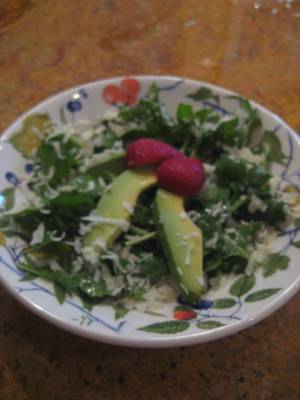
Mix some of the dressing with the arugula.  Place in individual bowls.  Sprinkle parmesan on top.  Top with avocado slices and strawberries.

June Cooking Tip – A ‘Must Have’ Grater

Microplane Grater
Microplane Grater
A closer look.
A closer look.


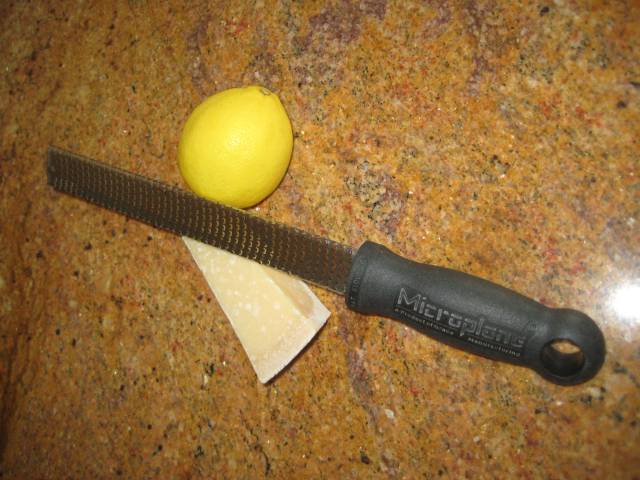
If you haven’t seen one of these graters, I highly recommend you look into getting one.  I have had mine for several years and it is the best!  Not only does it do a fantastic job grating parmesan cheese but it is the perfect grater for making lemon, lime or orange zest.  The zest comes out nice and fine so when you add it to dishes or salad dressings, you don’t end up with chunks of rind.  I also use this for grating fresh ginger.  Again it is so fine that the ginger blends nicely into whatever you are making.

I purchased mine at Peppercorn, a local cooking store.  Here is the Microplane website, in case you can’t find it in a store near you. 

I hope you like it as much as I do!

Health Food Fraud – Agave Nectar

Up until recently we regarded agave nectar as a relatively benign, low glycemic sweetener.  No more.  Recent articles in the Townsend Medical Newsletter and Wise Traditions, the quarterly publication of the Weston Price Foundation, as well on Dr. Mercola’s website, reveal that it is a chemically processed syrup made the same way as high fructose corn syrup with likely the same negative health effects as high fructose corn syrup.  Continue reading for more information.
Agave Nectar
Agave Nectar

May’s health tip of the month is brought to you from Dan and Talitha Butterfield.  Both have been involved in health and wellness for more than 35 years.  I have had the honor of knowing and trusting their insights and knowledge for almost 20 of those years.  For more information on them, please visit their website.

Here is what they have to say: 

Agave syrup, a refined fructose product is being cleverly marketed in the health food industry as a wholesome, natural, low glycemic sweetener.  Even the word “nectar” is deceiving, as if it is dripping fresh from flowers or fruit.

Agave nectar, or more accurately refined fructose agave syrup was created in the 1990’s using technology devised by corn refiners to chemically convert corn starch to corn syrup, known as high fructose corn syrup, the sweetener that has done much to increase obesity, insulin resistance and increased heart disease and diabetes.  The main carbohydrate in agave is starch, which, like corn starch, is chemically converted to highly refined fructose.

The sugar that comes from fruit is levulose.  The word “fructose” is cleverly used by corn refiners to make you think it is a natural fruit sugar.

Fructose is not absorbed like other sugars.  It does not go directly into the bloodstream, but instead it goes to the liver where it is converted to triglycerides and fat.  “Low glycemic” makes it sound safe.  It is anything but safe.  High fructose corn syrup is 55% fructose.  Agave “nectar” is about 70% fructose.

While refined fructose agave syrup won’t spike your blood sugar levels, it will deplete minerals, inflame the liver, harden the arteries, cause insulin resistance leading to diabetes, obesity and cardiovascular disease, and may be toxic for use during pregnancy.

So don’t use this unnatural sweetener or “health foods” that contain it.  As always, read labels so that you can make informed choices about what you put into your body.

 Hope this is helpful.       Talitha & Dan Butterfield