The Role of the Abdominal Muscles

When I say the word abdominal muscles or ‘abs’, what does it mean to you? My guess would be mostly you might think of a muscle on the front of the body that, when exercised a lot, will resemble a rippled or ‘six pack’ effect as one might find on a lean body builder. But do you really know the whole story? How many abdominal muscles there are? Or what roles they play? Or why we need to exercise them in various ways to get all of them to be strong and healthy? If you do know, no need to read further. If you don’t, you might find this beneficial!

Let us begin with a brief list of the muscles and where they are located. I doubt you want all the specifics so we will generalize where they attach:

  • The Rectus Abdominis or the classic ‘six pack’ muscle is actually a pair of muscles running vertically from the ribs that come off the sternum (ribs 5, 6 & 7) all the way down to pubic bone. They are separated by a layer of connective tissue called the Linea Alba. The word Rectus in Latin means ‘straight’.
  • The External Oblique are a pair of muscles that travel diagonally from the border of the lower 8 ribs downward and inward to the Linea Alba all the way down to the Inguinal Ligament.
  • The Internal Oblique, deep to the External Oblique, are fan shaped. They come off of the Inguinal Ligament and a portion of the top of your hip bone (Iliac Crest) up and inwardly towards the ribs and onto the fascia under the Rectus Abdominis.
  • The Transverse Abdominis, the deepest of the group, wrap around from the back fascia, attaching to the ribs as well as the top of the hip (Iliac Crest) and Inguinal Ligament all the way to the connective tissue that surrounds the Rectus Abdominis. Most of their fibers are running horizontally and form a sort of ‘girdle’ around your waist.

There are many important functions of this group of muscles and the more you appreciate them, hopefully the more you want to work to make them strong!

Think about breathing! Optimal breathing is derived from a posture where there is optimal musculature balance. “Very weak and protruding abdominal muscles are not able to generate maximum expiratory pressures to meet increased demands of breathing brought on by exertion or illness.” (Muscles Testing and Function, Fourth Edition)

Think posture! Optimal posture is a function of strong, balanced musculature. The abdominal muscles in particular will help to keep the pelvis in the correct position which will result in enabling the vertebrae to stay stacked properly above it.

Think organ support! Strong abdominal muscles support the trunk, allow movement and hold organs in place by regulating internal abdominal pressure.

Think low back pain! Weak abdominal muscles will allow that belly to protrude, which puts additional pressure on the vertebrae in the low back, especially the facet joints that end up taking the brunt of the load. They are full of pain receptors so pressure on them will result in low back pain.

Think stability! It is this group of muscles that play a key role in supporting our trunk. Of course they work in conjunction with several other muscles to create core stability but none of those will optimally function if your abdominals are weak. Strength and balance is the key!

Think movement! You may not think about it, but you use your abdominal muscles for physical activity every day. Standing, lifting and twisting, whether it’s putting away groceries or carrying your toddler, all will require the use of your abdominal muscles. The stronger they are the easier daily life will be.

Think balance! The abdominal muscles play a key role in keeping that fall or tumble at bay. A study published online June 21, 2022, by the British Journal of Sports Medicine found that people who are unable to stand on one leg for 10 seconds in middle and later life have almost double the usual risk of premature death. Researchers evaluated the health information and balance test results of 1,700 people (ages 51 to 75, and all free of walking problems), and then followed them for seven years. During the study, 123 participants died of various causes. After taking participants’ age, underlying conditions, weight, and other factors into account, scientists determined that failing the balance test was associated with an 84% higher risk of dying within the study period, compared with passing the balance test.

As you can see from the above, having a solid core is the foundation for all activities. The stronger the abdominal musculature the better off life will be! It is through engaging this entire group in all the various movements they perform that will keep us feeling the best possible! We need to learn to not ‘tuck the butt’ under by squeezing our gluteal musculature but ‘lift’ the front of the pelvis up by using all the lower portion of the abdominal muscles. We also need to hold that pelvis in place with those lower fibers while lifting the torso up off the hips with the Rectus Abdominis and Oblique muscles. While lifting we need to then also turn the torso for mobility and long strong oblique musculature. With all of it we need to learn to lift ‘up and in’ to allow for the abdominal compression for enhancing respiration and organ support.

The more we learn to engage our abdominals properly, whether doing standing and doing floor exercises, the better they will respond to naturally support our entire body every day through every movement. Is it any wonder why I am always talking about using your abs throughout every Essentrics class?

As for that ‘six pack’, most likely, unless you are a body builder, chances you will never have one. Besides there is more and more research showing that those facial connections in between the muscle bellies of the Rectus Abdominis might not be that beneficial to be that tight! So rather than think image, think strength, health and quality of life.

Here’s to keeping all those abs happy and healthy!
Life’s Little Changes – The Fat vs Muscle Factor

Fitness

It is a known fact that as we age our bodies change.  Starting around the age of 45 we start to lose muscle mass at a rate of approximately 1% per year.  Although this doesn’t sound like a big deal, it really is.  The reason being is because at the same time our bodies are starting to lose muscle mass, most people are starting to gain weight.  The average American gains 1-2 pounds of weight per year as they age.  Again that doesn’t sound like a lot but if you average that over 10 years, you have gained 15 pounds! 

Let’s look at that.  Muscle is about 18% denser than fat.  In other words, think about weight verses volume.  A pound is a pound but the amount of space one takes up verses the other is the key factor.  For an extreme example think about the weight of one pound of feathers verses one pound of brick.  Since the brick is so much denser, it would take up much less space than one pound of feathers would.  You get the point?

So, if muscle is 18% denser than fat and we are losing mass yet gaining weight what do you think we really gaining?  Fat, of course.  Our bodies are either staying the same size or, in many cases getting physically bigger.  Consequently our ratio of muscle to fat is changing dramatically.

Less muscle means less strength thus decreasing our ability to do even the little things.  I met a woman who could no longer carry her own groceries into the house because they had become too heavy and she was not very old!  Verses the woman who still lifts weights at 68 years old, looks fabulous and carries just about anything and everything she wants.  Big difference.  This doesn’t even address the bigger picture of doing the fun things.  I have a 77 year old friend that plays tennis like no body’s business.  She competed in a league a few weeks ago, played for 3 hours to win the overall competition, and she was playing against women in their 50’s.  Now that’s living!

A decrease in muscle mass does not only equate to less strength.  With less muscle, a decrease in bone density rises thus leading to the potential for osteoporosis.  In addition studies have shown that an increase in strength can:

  • Result in a decrease in arthritic pain[1]
  • Improve balance and flexibility
  • Assist in balancing blood glucose levels
  • Have a positive impact on our emotional being
  • Strengthen the heart
  • And much more

So let us start by figuring out our own ratio of body fat to lean muscle.  There is a means of measuring this called the Body Mass Index or BMI.  BMI is a comparison of your height to weight.  This formula is being used more and more in the medical field and yet it is not necessarily an accurate way to measure body fat, in my opinion.  Take the individual who is very muscular and consequently quite lean.  They will come up on the BMI chart as having too high of a body mass index for their size.  Again this is because of the fact that muscle is so much more dense than fat.  A very small person, with a body fat of say 15%, will appear fat on with this measurement.  Or the body builder that is 5’6” and weighs 240 pounds.  His body fat may be around 12% and yet on a BMI chart he will show up obese.

A better way to determine the ratio is through actual measurement of body fat.  This can be done at a gym by using calibrators where skin is lifted from the muscle and measured on various parts of the body.  It can also be done in a pool by measuring how fast you sink; supposedly a better way and yet not too easily found.  For those of you that don’t have access to these kinds of measurements, I did find a source online that seems pretty accurate.  Simply go here to take that test  

Once you have this information you have the power to change it.  Rather than think, ‘I’m doomed!’ it is time to think positive.   It means you have an opportunity to make changes that can have an incredible impact on your health, your future and how to enjoy the balance of your life.  An Encore Life.  How great is that?

As time goes on and the kids are grown, there is more time to focus on ourselves separately and together with our partners.  It is a time to engage in new endeavors.  To think outside the box.  To explore things that we might have thought about in the past but just didn’t have the time to try.  It is time for an even better life!

Building muscle requires resistance.  When a muscle is challenged physically it puts stress on the bone.  The bone in response creates additional osteoblasts or cells that produce more bone.  The process is known as the piezoelectric effect.  Greater stress = more cell production=denser bones.  And, as mentioned, this is an excellent way to prevent osteoporosis.

Not only will that additional muscle strengthen your bones but it will increase your basal metabolic rate or BMR.  This is the basic amount of energy needed per day to function.  Additional muscle mass = higher BMR = additional calories burned.  Therefore a person with a higher ratio of muscle to fat can and actually needs to eat more.  Now isn’t that a great thing!  Of course what we eat is important as well.  To create these positive changes requires a blend of exercise and diet but for the purpose of this article let us focus on the exercise portion.  The diet will be addressed in a future article.

For now, let us take a look at the ways in which we can increase our muscle mass.  Of course there is the obvious – going to the gym to lift weights.  This is a great way and works fantastically for some.  For others this sounds like a death sentence!  Here are some additional ideas that can be really fun, give you a cardiovascular workout as well and offer resistance training:

Hiking Outdoors is good for the body, mind & soul!

Hiking up and down hills (my personal favorite).  Although this doesn’t address the upper body it is great for your legs and hips.  You would need to supplement with some upper body training.

Just started doing this... wow what a workout & so fun!

Rowing.  This fun sport actually uses both your upper body and (to my surprise) a great deal of legs.  Overall it can really offer resistance as well as cardiovascular fitness.

Ok I'm not there yet... you?


Yoga can be a good form of resistance training, expecially the more challenging types such as Ashtanga Yoga.

Doesn't this look fun!

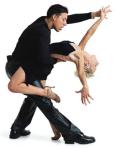
Taking classes such as certain forms of dance, boot camps and so forth.

Why not?
Why not?

Kayaking.  This is more for building upper body strength but it is fast-paced and fun!

This is great to do indoors as well.

Rock Climbing.  Now this one might really take you to a new place!

This is used by all ages.

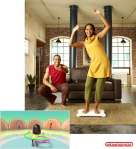
Even the Wii Fit can offer those that want to stay inside a great workout.

These are just some ideas.  Play around with different types of activities that you enjoy and see if it fits into a strength or resistance training category.  Do not buy into the, ‘well I’m getting older…’ mentality.  Step out and up and make tomorrow even better than today!  You will be amazed at just how much you can change your body and fitness level!  We are only limited by our imagination so be creative, build muscle and head towards a more dynamic, healthy future! 


[1] Study at Tufts University