Crème Fraiche is originally a French product and is a fantastic ingredient that can be used for many things. It is similar to sour cream but has a softer, less sour taste. I like to add just a dollop to soup, mix it with Greek style yogurt for sauces, or add a little to sautéed vegetables just before serving. It is usually found in the cheese section of the market, at least at Whole Foods.
I just learned from a dear friend of mine, Mark Beran of Medovina, how to make it at home. This is so easy and much more cost effective that purchasing it pre-made.
Mix equal parts of buttermilk and whipping cream, I prefer organic. Set the mixture on the counter overnight, letting it sit for a minimum of 8 hours. Stir briefly and refrigerate. It will keep fresh in the refrigerator for at least 2 weeks or more.
Note: If you prefer it a bit more sour, add a bit more buttermilk.
This is a great meal in itself. Also, the beauty of this salad is that you can make it even easier by using leftover chicken from another meal. Just in case you don’t have any on hand, this recipe includes a great, easy way to bake chicken.
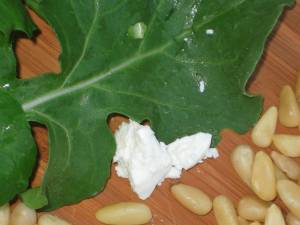
From my garden!
Arugula, Goat Cheese & Pine Nuts... Yum!
Ingredients:
1 whole chicken, cut in half lengthwise and backbone removed (I get the butcher at Whole Foods to do this for me.)
2-3 T Olive oil
Coarse Celtic Salt & Fresh Ground Pepper
For salad:
1 lg Arugula bunch
1 Watercress bunch
3-4oz Goat Cheese, plain
1/3 C Pine Nuts, toasted
10 Fresh Raspberries
For Dressing:
1/3 C Olive Oil, get a nice mild one
1 med Shallot, finely minced
3 T Champagne Vinaigrette
1+ C Fresh Raspberries
1 tsp Honey
Preparation of chicken:
Heat oven to 450 degrees. Sprinkle chicken halves generously with celtic salt and pepper. Heat large, oven proof skillet on med high. Add olive oil. Place chicken halves in skillet, skin side down. Cook until skin is brown, approximately 5 minutes. Leaving chicken as is, place entire skillet in oven. Bake for approximately 30 minutes or until chicken is just about falling off the bone. Remove from oven and place chicken on cutting board. Cover with foil and let stand for 10 minutes before cutting.
Preparation for salad dressing:
Place olive oil, shallot, vinegar, honey and raspberries in blender. Blend until smooth. Depending on size of the raspberries, add more if needed. Salt and pepper to taste.
Place arugula and watercress in bowl. Toss with vinaigrette. Place slices of chicken on top of salad. Top with crumbled goat cheese and pine nuts. Arrange extra raspberries over top.
Note: The salad dressing can keep in the refrigerator for several days so you can make it ahead or keep the extra for another salad.
It is a known fact that as we age our bodies change. Starting around the age of 45 we start to lose muscle mass at a rate of approximately 1% per year. Although this doesn’t sound like a big deal, it really is. The reason being is because at the same time our bodies are starting to lose muscle mass, most people are starting to gain weight. The average American gains 1-2 pounds of weight per year as they age. Again that doesn’t sound like a lot but if you average that over 10 years, you have gained 15 pounds!
Let’s look at that. Muscle is about 18% denser than fat. In other words, think about weight verses volume. A pound is a pound but the amount of space one takes up verses the other is the key factor. For an extreme example think about the weight of one pound of feathers verses one pound of brick. Since the brick is so much denser, it would take up much less space than one pound of feathers would. You get the point?
So, if muscle is 18% denser than fat and we are losing mass yet gaining weight what do you think we really gaining? Fat, of course. Our bodies are either staying the same size or, in many cases getting physically bigger. Consequently our ratio of muscle to fat is changing dramatically.
Less muscle means less strength thus decreasing our ability to do even the little things. I met a woman who could no longer carry her own groceries into the house because they had become too heavy and she was not very old! Verses the woman who still lifts weights at 68 years old, looks fabulous and carries just about anything and everything she wants. Big difference. This doesn’t even address the bigger picture of doing the fun things. I have a 77 year old friend that plays tennis like no body’s business. She competed in a league a few weeks ago, played for 3 hours to win the overall competition, and she was playing against women in their 50’s. Now that’s living!
A decrease in muscle mass does not only equate to less strength. With less muscle, a decrease in bone density rises thus leading to the potential for osteoporosis. In addition studies have shown that an increase in strength can:
So let us start by figuring out our own ratio of body fat to lean muscle. There is a means of measuring this called the Body Mass Index or BMI. BMI is a comparison of your height to weight. This formula is being used more and more in the medical field and yet it is not necessarily an accurate way to measure body fat, in my opinion. Take the individual who is very muscular and consequently quite lean. They will come up on the BMI chart as having too high of a body mass index for their size. Again this is because of the fact that muscle is so much more dense than fat. A very small person, with a body fat of say 15%, will appear fat on with this measurement. Or the body builder that is 5’6” and weighs 240 pounds. His body fat may be around 12% and yet on a BMI chart he will show up obese.
A better way to determine the ratio is through actual measurement of body fat. This can be done at a gym by using calibrators where skin is lifted from the muscle and measured on various parts of the body. It can also be done in a pool by measuring how fast you sink; supposedly a better way and yet not too easily found. For those of you that don’t have access to these kinds of measurements, I did find a source online that seems pretty accurate. Simply go here to take that test
Once you have this information you have the power to change it. Rather than think, ‘I’m doomed!’ it is time to think positive. It means you have an opportunity to make changes that can have an incredible impact on your health, your future and how to enjoy the balance of your life. An Encore Life. How great is that?
As time goes on and the kids are grown, there is more time to focus on ourselves separately and together with our partners. It is a time to engage in new endeavors. To think outside the box. To explore things that we might have thought about in the past but just didn’t have the time to try. It is time for an even better life!
Building muscle requires resistance. When a muscle is challenged physically it puts stress on the bone. The bone in response creates additional osteoblasts or cells that produce more bone. The process is known as the piezoelectric effect. Greater stress = more cell production=denser bones. And, as mentioned, this is an excellent way to prevent osteoporosis.
Not only will that additional muscle strengthen your bones but it will increase your basal metabolic rate or BMR. This is the basic amount of energy needed per day to function. Additional muscle mass = higher BMR = additional calories burned. Therefore a person with a higher ratio of muscle to fat can and actually needs to eat more. Now isn’t that a great thing! Of course what we eat is important as well. To create these positive changes requires a blend of exercise and diet but for the purpose of this article let us focus on the exercise portion. The diet will be addressed in a future article.
For now, let us take a look at the ways in which we can increase our muscle mass. Of course there is the obvious – going to the gym to lift weights. This is a great way and works fantastically for some. For others this sounds like a death sentence! Here are some additional ideas that can be really fun, give you a cardiovascular workout as well and offer resistance training:
Hiking Outdoors is good for the body, mind & soul!
Hiking up and down hills (my personal favorite). Although this doesn’t address the upper body it is great for your legs and hips. You would need to supplement with some upper body training.
Just started doing this... wow what a workout & so fun!
Rowing. This fun sport actually uses both your upper body and (to my surprise) a great deal of legs. Overall it can really offer resistance as well as cardiovascular fitness.
Ok I'm not there yet... you?
Yoga can be a good form of resistance training, expecially the more challenging types such as Ashtanga Yoga.
Doesn't this look fun!
Taking classes such as certain forms of dance, boot camps and so forth.
Why not?
Kayaking. This is more for building upper body strength but it is fast-paced and fun!
This is great to do indoors as well.
Rock Climbing. Now this one might really take you to a new place!
This is used by all ages.
Even the Wii Fit can offer those that want to stay inside a great workout.
These are just some ideas. Play around with different types of activities that you enjoy and see if it fits into a strength or resistance training category. Do not buy into the, ‘well I’m getting older…’ mentality. Step out and up and make tomorrow even better than today! You will be amazed at just how much you can change your body and fitness level! We are only limited by our imagination so be creative, build muscle and head towards a more dynamic, healthy future!
How healthy are your children? Are you finding that they are starting to gain more weight than they should? What activities are your children involved in? Do you find they are pretty active and yet are still starting to get heavy?
Children are our future and how healthy they are today will have a direct impact of how healthy they become as adults. There is an alarming rise in obesity amongst children. In fact, childhood diabetes in not only on the rise but it is growing daily. This will lead to additional health issues such as cardiovascular disease, immune issues and much more.
Now is the time to start having a positive impact on your child’s health! You can start by learning about the benefits of building muscle through weight training for your children. Fred Hahn, the author of Strong Kids Healthy Kids, will speak to you about the studies done and how to incorporate weight training into your children’s lives. Not only will your kids love it but so will their bodies.
LISTEN TO THIS PODCASTtitled “Adolescent Obesity & Fitness” to learn how to start having a positive impact on your kids health.
Last week there was a statistic in the Daily Camera about the number of hours people watch TV on average per month. The number astounded me… 151 hours!!! That equates to about 5 hours per day! I just can’t imagine. Not only can’t I imagine, but it has gotten me thinking about the inundation of commercials this puts into our brains. These commercials teach us about eating fast food and taking lots of medications.
When I was in nutrition school in NYC, we had a speaker talking about commercials. Although I can’t remember who exactly it was, the impression he left has not gone away. Basically what he presented was how commercials lure you into thinking that your life is not complete. Companies present you with these idyllic lifestyles, showing people that are healthy and happy. They then indicate this would not be the case if it weren’t for a certain drug or food that the people in the commercial are consuming.
Whether we like it or not, this gets into our subconscious and we start down the path to finding this nirvana that only comes with something outside of ourselves. It is a wonder we are overweight, obese, taking too many medications and generally not healthy? Think about it.
How many hours a day do you watch TV? What do you gain from it?
I would like to challenge you. Buy a little notebook. For at least one week, write down how many hours a day that you sit in front of the tube. Record the shows you watch and mostly record what is being advertised during that time. Then, do the following:
Ask yourself if the show stimulated your brain in some healthy way.
Watch how much you respond to those commercials.
Do you get hungry for some fast food that would have never crossed your mind had you not seen an advertisement for it?
More than that, do you respond?
Do you go out and eat some junk food that not only doesn’t fulfill you but supports you being less than healthy?
Last, do you find yourself thinking that “If only I took that medication I too would feel better!”
Is this the way you want to live your life? Do you want someone else influencing you what to eat and what medications you are told you need to take?
I believe this process will help you to take back control of your own life. Once you see how much marketing can influence your thoughts and actions you may choose to do something different.
Start making a list of things you can do that stimulate your brain, offer you exercise, make you notice the amazing world around us, and provide you with a social setting where you can have great conversation rather than all just staring at the tube together. Once you have your list, start implementing some of those things into your evenings and weekends rather than watching television. I think what you will find will be a richer, more rewarding life that provides you with healthy alternatives to the dreaded marketing gurus on TV!
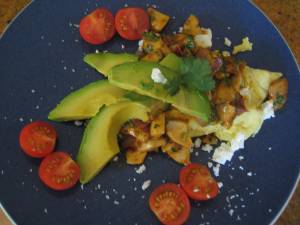
Here is another idea for putting on top of those fluffy scrambled eggs. You could also put this on top of grilled vegetables or baked chicken to add delicious flavor and more nutrients.
Ingredients:
1 TBSP Butter
½ Purple Onion, chopped
¼ lb Mushrooms, chopped (I used trumpets as they have a nice thick texture.)
Melt butter in medium skillet over medium heat. Add onion and mushrooms and sauté for 2 minutes. Add white wine, pesto, chipotle pepper and crème fraiche. Continue to sauté until the vegetables are cooked, approximately 4 more minutes. Just before serving stir in the cilantro. Sprinkle the feta on top of the eggs, chicken or grilled vegetables. Top with this mixture. Finish with the avocado slices nicely presented on top.
Carbohydrates such as pasta, bread, cereals, and all sorts of grains have been a part of our diet for a long time. In fact, for many people, these foods have not only become a staple but a major portion of a daily diet. Is this a good thing?
I am excited to bring to you a new source of information – the podcast. On a regular basis I will have professionals bring you information that you can download and listen to whenever and wherever you have time. It’s free and a great way to take in information.
This series is starting with Dan Butterfield. Dan has been involved in health and nutrition for many years and has studied extensively. As new research has come about, Dan has altered his own diet to support a healthier and healthier way of living. In this first podcast Dan will be speaking to you about grains and their role in the diet. To many of you, this information may be new and seem like a big deviation from your current diet. I strongly suggest you listen to the podcast several times and really try to apply the knowledge Dan is providing you with.
I know for myself, gradually I have changed the way I eat especially the quantity in which I consume carbohydrates such as pasta, bread, and many grains. Over the last several years, I have lost about 8 pounds, have less bloating and digestive problems and find my energy levels are more equal throughout the day. You may too.
The other night I made a meal totally of vegetables. Even though it was tasty, we were both hungry shortly after. I decided to test something I knew about but never actually tried…
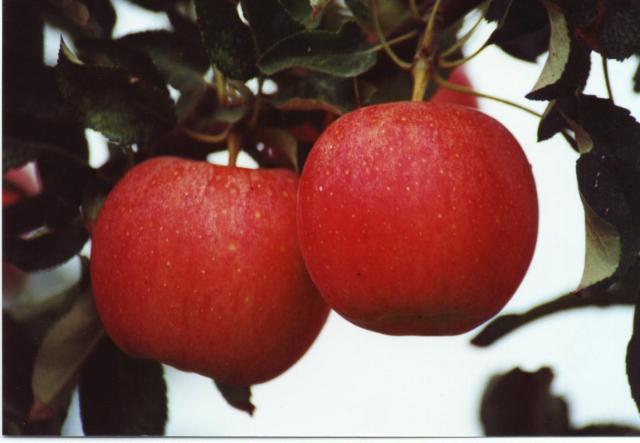
I cut up a Pink Lady apple. We both ate half and soon after the feelings of hunger were gone.
Amongst the many benefits of apples, they are low in calories, a great source for pectin, fiber and nutrients. The fiber slows down the digestive process leaving you feeling full longer where the pectin is great for digestion and an excellent intestinal regulator, in other words it promotes healthy intestinal flora and supports normal colon function.
Apples also contain two acids – malic and tartaric – which inhibits fermentation in the stomach thus making it one of the easiest fruits to assimilate. They help to ease thirst as they are moistening. Especially green varieties are beneficial in that they cleanse the liver and gallbladder. Last, apples are high in flavonoids which help in the reduction of heart disease.
So, next time you are still hungry after dinner or are used to snacking later in the evening, why not try one of natures’ amazing creations? THE APPLE
Quote from the New York Times Magazine, August 2, 2009:
“The more time a nation devotes to food preparation at home, the lower its rate of obesity. In fact, the amount of time spent cooking predicts obesity rates more reliably than female participation in the labor force or income.”
Why I love to cook!
I love the creativity of it all. I get to think – but not too hard – what I could make that is delicious, pretty easy, will impress my friends and family and be healthy.
I grew up with 2 working parents and although Mom prided herself in making home cooked (sort of) meals, they weren’t always that tasty and mostly had one spice ingredient – Lawry’s salt. Now I have to give her credit for her efforts but she wasn’t my inspiration. I ended up being friends with my sisters’ best friend. I was 16 and she was 21. Her name was Louise and she was a great cook. In looking back, I can still hear my Mom say, ‘when did you learn to eat that?’ The ‘that’ included (now) staples like garlic, onion, spices, herbs, and so forth. All I could ever tell Mom was ‘Louise taught me!’
From there I got into health food – that tasteless, no salt, old dried out herbs kind of food. I stopped using salt, stopped cooking in aluminum pans, and stopped storing in plastic in the ‘80’s. Now most of this thought pattern has continued but I have to say I sure have learned how to make food tasty! At that time I was quite proud of what I cooked but anyone who ate it suffered! I didn’t know this until about 6 years ago when I made a meal for my sister. She wasn’t feeling well and laid down for a nap. Upon awakening she came into the kitchen to see what smelled so good. (You see she, my brother and I were together, just the 3 of us, for the first time in 18 years!) I can still hear her remark about those bad meals she and her family had to eat when I cooked for them all those years ago. I had no idea!
Well, she opened the oven and exclaimed, ‘oh, a whole chicken!’ I kind of looked at her and said, ‘yea, so?’ To think that she was a stay at home mom turned stay at home grandmother and yet she hadn’t cooked a whole chicken in years. Instead she had the illusion that cooking whole things like a chicken was time consuming and difficult. The result was that she mostly cooked things like potatoes from a box, reheated a ham, vegetables from a can or frozen package. Things like that. On the other hand, I have been working full time and managing a house for 26 years (at that time). Obviously we had taken different paths on our lives.
Fast forward to today, 6+ years later and I have grown into a better, more self-confident cook. But let’s not go there just yet…
The true credit for my initial cooking ability came from my friends Jan and Jeff. I met them in the late ‘80’s when I was working for them in Hawaii. We became fast friends and I had the pleasure (both socially and gastronomically) of sharing many meals with them. They both cooked and did so mostly together. It was, along with a martini, a social event; a place where they would come together after a long days work to catch up, share their day. This was an experience completely new to me and I loved it. It opened my eyes to not only cooking but a wonderful way of engaging. I was hooked and, although single, wanted it to be a part of my life. I truly enjoyed the connection and delicious rewards that came with the experience.
I left Hawaii in 1990 to move to Colorado and pursue a new career – one as a massage therapist. Among the many things I brought with me was that fantastic, mouth watering joy of cooking great food and sharing it with friends.
I have continued to do so and have added a great dimension – a partner – a man that is vastly interested in the senses, including taste, and is appreciative of my cooking. It has enabled me to be more creative (and less neurotic about precise measurements in recipes) and more risk taking. I put together dishes based on nothing more than an idea and what I have available. The results? Mostly I end up with really yummy dishes. Do I still read and try recipes? You bet! They give me inspiration to be more creative.
Why I’m telling you all this is because of a concern for where our society is heading. I am reading more and more about junk food, fast food, pre-packaged food all dominating what we put in our mouths. Pre-packaged food started in the ‘50’s. It was marketed as the ‘new way’. The unfortunate thing is along with it has come a tremendous increase in obesity (fact) and a decrease in communication and relaxing with each other while eating, in my opinion.
The obesity stems from foods that are low in nutrition and high in (bad) fats, sugar, and salt. These are all ingredients that, in big enough quantities, can mask the disgusting taste of the other cheap denatured ingredients. It is a sin! What has made us rise above other animals is our ability to prepare and cook foods, our ability to plan, store, and create meals that enable us to spend time being together (and working) rather than grazing or hunting our time away. It has provided us the luxury of sitting down, eating and connecting with fellow human beings.
Now I realize people will argue that we still do this while inhaling a meal together at McDonalds but is it really the same? I think not. Not only are we missing out on the nutrients but the care, love and pride that goes into a homemade meal. We are feeding our guts but are we really nourishing any part of our selves? As for the ‘I don’t have time’ concept, I don’t buy it. I continue to work full time and manage a house yet I also cook about 80%-90% of the meals. And they are meals that are healthy, focused on local growers, very nutritious, easy to make and delicious. This is not to say I don’t enjoy going out to eat but it makes it a special occasion and it allows me to afford to go somewhere that is healthy.
My goal is to introduce you… entice you… encourage you… and to offer you meals that will take you down this fun rewarding path. Oh and there are some side benefits – you will feel physically better, have more energy, possibly lose weight (if you need to), and save money! Now what can beat that?
Try out the recipes on my website. Meanwhile I am putting together an eBook titled 30 Meals 30 Days that will offer you a variety of dinners so you won’t have to plan a thing. There will be a list of ingredients to keep on hand in your kitchen, a weekly shopping list, and short videos to show you just how easy healthy cooking can be!
Check back regularly for the launch of the eBook or sign up for our mailing list (no I will not give your name to anyone!). If you choose to sign up, I will let you know when it is available. Meanwhile, eat healthy and share good food and great conversation with your friends and family!
I was reading an article the other day about children who are getting hypertension or high blood pressure. It seems that there is an epidemic going on in Canada. This particular article talked about the amount of sodium in most Canadian’s diets, especially children’s. Their focus was on all the packaged foods that have sodium that you would never think would. The result was shown in the example of a 14 year old boy who was diagnosed with hypertension. Even though he was of normal weight and very active he had unusually high blood pressure. It was determined that he ate a large amount of processed foods which dramatically increased his sodium to unhealthy levels. Seems he is just one example of children in Canada suffering from this syndrome.
Let us take an example of just how quickly sodium adds up:
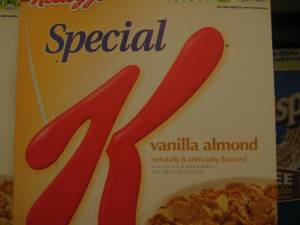
For breakfast you have 1 ½ cupsof Special K …..
320 mg of sodium
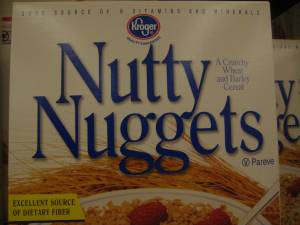
Or better yet you have 1 ½ cupsof Nutty Nuggets ….
960 mg of sodium!
During the day you are hungry and have 12Snack Sticks .…
Snack Sticks
320 mg of sodium
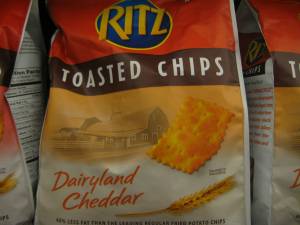
Or better yet 14Ritz Toasted Chips, Dairyland Cheddar ….
290 mg of sodium (now who can only eat 14 chips???)
After dinner you have 2Double Stuf Oreos ….
160 mg of sodium
Or maybe 2Nilla Cakesters ….
135 mg of sodium
Given these foods, on the best day of eating you would have consumed 745 mg sodium.
The worst case scenario you would have consumed 1,440 mg of sodium!!!
And that is only with eating a cereal for breakfast, snack during the day and cookie for dessert. Imagine just how many total milligrams of sodium someone could consume if they ate more processed foods during the day and added table salt into their home cooked meals.
Although sodium can play a large role, about 50% of people with high blood pressure are salt-sensitive, it is not the only issue. Here are some other things to look at:
Obesity and hypertension go hand in hand. It can result in a range of metabolic syndromes including high blood pressure, high cholesterol and insulin issues.
Stress and how we respond to it will often affect hypertension. If we don’t manage our stress healthfully it will impact our bodies in negative ways.
Dietary practices will have a big impact on it. Certain foods will benefit blood pressure levels while others will increase it.
Age is considered to play a role and yet I struggle with buying into this too much. I feel we have a choice in how we age whether it is gracefully and healthily or poorly and sedentarily.
Genetics can have an impact. If we have parents that have hypertension then the chances of getting it are higher. In this situation, it is even more important to be mindful of all the above categories.
Let us begin by having an understanding of exactly what hypertension or high blood pressure means and what are the health concerns that arise from it. We will start with a description from the Prescription for Nutritional Healing, 4th Edition:
“When the heart pumps blood through the arteries, the blood presses against the walls of the blood vessels. In people who suffer from hypertension, this pressure is abnormally high. If blood pressure is elevated, the heart must work harder to pump adequate amount of blood to all tissues of the body.”
This can result in damage to the heart, blood vessels, brain and kidneys. Hypertension is considered the ‘silent killer’ because the aforementioned damage has started even before one realizes they have high blood pressure. It is the major risk factor for heart failure, kidney disease and stroke.
So how does it cause all this?
In the blood vessels, hypertension:
Causes a thickening of the tunica media, which is the middle coat of the artery or vein which gives it its’ elasticity
Increases the development of atherosclerosis; an accumulation of fat-containing material on the walls of the arteries
Coronary artery disease; a narrowing of the coronary arteries, and a systemic or generalized vascular resistance
In the heart, hypertension:
Forces the ventricles or the lower chamber of the heart to work harder to eject the blood
This in turn can cause muscle damage and fibrosis or a buildup of collagen in between the muscle fibers
This can eventually cause the left ventricle to enlarge, weaken and dilate
In the brain:
The arteries are less protected than other arteries in the body and can eventually cause them to rupture causing a stroke
In the kidneys, hypertension:
Can damage the arterioles or microscopic sized arteries that deliver blood to capillaries
This can result in a decrease of blood to the kidneys causing them to secrete more renin which will elevate the blood pressure even more
As you can see, regularly increased blood pressure is not a good thing!
So what is normal? It used to be that 120/80 was considered ideal but that was changed in 2003 by the Joint National Committee on Prevention, Detection, Evaluation, and Treatment of High Blood Pressure as studies were indicating even readings at this level increased the potential risk for cardiovascular disease (CVD). Now normal is less than 120 systolic[1] and less than 80 diastolic[2]. Note: For each 20/10 increase above normal blood pressure, the risks for CVD doubles.[3]
Now that we have an understanding on blood pressure and it affects on the body, let us take a look at things we can do to positively affect it.
Sodium
Most diets are high in sodium due to excess dietary salt. Dietary salt is 40% sodium and 60% chloride. Sodium needs differ depending on the amount of exercise and sweating. Generally speaking, a minimum of 1,500 mg per day and up to 2,300 mg per day is ideal. One teaspoon of commercial salt contains about 2,000 mgs. When purchasing processed or packaged food sodium can add up quickly, as you previously saw, so really read your labels! Remember sodium can be disguised as salt, soda, Na, MSG, meat tenderizers and so forth. Note: An ideal form of salt to use is Celtic Salt as it is a non processed food that is gathered off the shores of places like Southern France. It is high in many minerals and actually enhances the taste of foods rather than masking them like table salt. Due to its great taste, you only need to use a little bit.
Obesity
“The best treatment for high blood pressure… loss of even a few pounds helps reduce blood pressure in overweight hypertensive people.”[4] As you can imagine, this is an article in and of itself. This will be addressed in a future blog.
Stress
Finding ways to manage your stressors is essential. Meditation, yoga, and biofeedback can be very effective in lowering high blood pressure. All of these can assist in decreasing the release of epinephrine and norepinephrine from the adrenal glands. For more details on stress and its affects, read THIS ARTICLE.
Diet
Eating a diet rich in fruits and vegetables will provide your body with good sources of fiber and the necessary minerals, potassium, calcium and especially magnesium. Adequate amounts of these minerals are associated with lower risk of hypertension. Eating a diet rich in Omega 3’s will keep your cell membranes healthy and flexible. For detailed information on these, read THIS ARTICLE. If you are a grain eater, use the following whole grains – rye, oats, amaranth and especially buckwheat. Proteins should include primarily fish. Avoid eating much, if any, red meat. Avoid all highly refined foods as they not only deplete your body of essential nutrients but also tend to put a lot of excess stress on the adrenal glands.
Liquids
Consume enough water daily. It is the most important and abundant inorganic compound in all living systems. It is a conduit for almost all the body’s chemical reactions. Water can be depleted by many things, including other items we drink. It is therefore suggested to avoid excess caffeine and alcohol. Avoid soft drinks all together.
Exercise
Regular moderate exercise will assist in burning fat, decrease weight, increase blood flow, and aid in stress reduction. Excess can have negative effects, especially if you have had a sedentary lifestyle for some time. It is more beneficial to gradually increase your levels, give yourself rest days, and focus on moderation and enjoyment. It is determined that moderate exercise, even brisk walking, several times a week for 30-45 minutes can lower systolic blood pressure by about 10 mHg.[5]
Rest
It is common to not get enough rest and sleep. Try to reevaluate your daily routine to see if you are getting adequate amounts. Sleep should be closer to 8 hours per night rather than the 6 or less many people get. This will assist your entire system in recovering and rejuvenating.
This is just a beginning list of ideas and suggestions. There are many excellent books available to offer you more thoughts and details. Begin by working on the aforementioned suggestions that you feel will have a positive impact on your blood pressure levels.
Last but not least, make sure to take your blood pressure regularly as it is the only way you will know if you are having positive effects.[6]
If you enjoyed this article, you might consider joining our mailing list in order to receive notification as to all the new monthly information on the blog.
[1] Systolic = measured when the heart muscle contracts and ejects blood into the aorta
[2] Diastolic = measured while the heart muscle is relaxing between beats
[3] Understanding Normal and Clinical Nutrition, Seventh Edition
[4] Principles of Anatomy and Physiology, 11th Edition
[5] Principles of Anatomy and Physiology, 11th Edition
[6] Of course regular checking with your doctor is a given.
















 Health & Nutrition Experts